
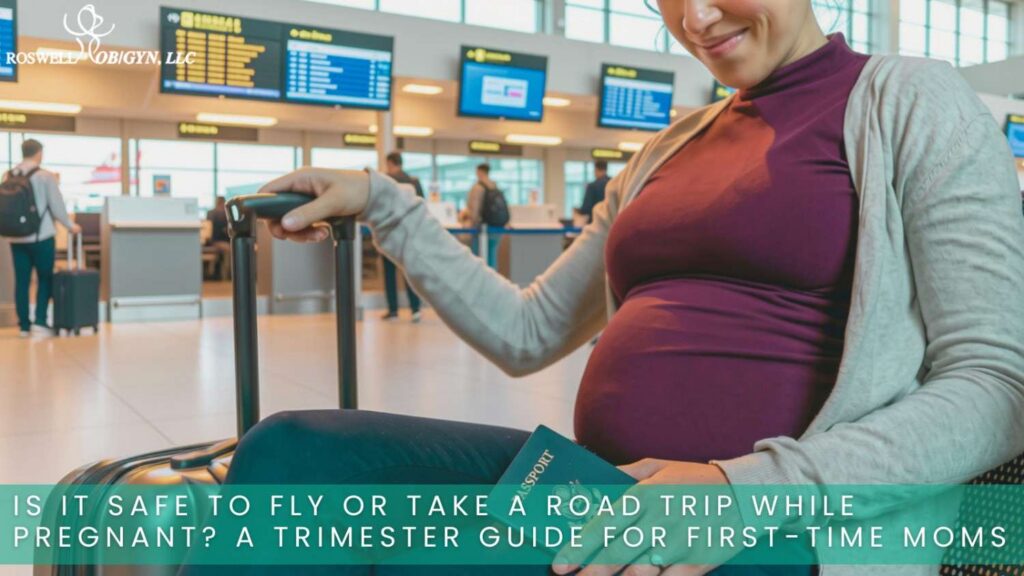
Flying and road trips are generally safe during a healthy, low-risk pregnancy up to 36 weeks, with the second trimester widely regarded as the most comfortable and lowest-risk window for travel. Both modes of transport carry trimester-specific considerations that are worth understanding before booking anything. This guide covers what changes by trimester, how to travel safely by air and by car, when to stop traveling as your due date approaches and what to pack before any trip. Your prenatal care provider can review your specific pregnancy history and confirm whether travel is appropriate for you before you go.
Which Trimester Is the Safest Time to Travel During Pregnancy?
Travel safety during pregnancy shifts across all three trimesters based on how the pregnancy is progressing, how you are feeling physically and how far you are from your due date. The table below summarizes the general picture for each trimester.
| Trimester | Weeks | Travel Safety | Key Considerations |
| First | 1 to 13 | Generally safe once intrauterine pregnancy is confirmed by ultrasound | Fatigue and morning sickness can make travel uncomfortable; miscarriage risk is higher during this period as a baseline, independent of travel |
| Second | 14 to 27 | Optimal travel window | Nausea typically subsides, energy returns, belly is not yet restrictive; complication risk is at its lowest point |
| Third | 28 to 36 | Safe with planning up to approximately 36 weeks | Most airlines require fit-to-fly documentation after 28 weeks; avoid remote destinations with limited obstetric access; plan around proximity to your care team |
| Late Third | 36 weeks and beyond | Long-distance travel is not advised | Most airlines restrict flying; ACOG advises against long-distance travel at this stage regardless of transport mode |
The second trimester stands out as the practical sweet spot because most first-trimester symptoms have resolved and the physical changes of late pregnancy have not yet arrived. Travel in the first and early third trimesters is manageable with the right preparation and a conversation with your provider beforehand.
Is It Safe to Fly During Pregnancy?
For most healthy pregnancies, flying is safe up to 36 weeks on domestic routes. Cabin pressure and cosmic radiation at commercial cruising altitude are not harmful at the exposure levels of routine flights per ACOG guidance. TSA millimeter wave body scanners emit non-ionizing radiation and are cleared as safe during pregnancy by both TSA and ACOG, so standard airport security screening does not require any special accommodation.
The main physiological consideration during air travel is circulation. Pregnancy brings changes to venous blood flow, and prolonged sitting in a pressurized cabin with limited movement means circulation in the legs receives less support than it does during normal daily activity. Planned movement during the flight is an important part of flying safely while pregnant rather than an optional comfort measure.
Airline policies vary more than most people expect. Most domestic carriers allow travel up to 36 weeks without documentation. International carriers often have earlier cutoffs, with some restricting travel after 28 to 32 weeks or requiring a fit-to-fly letter from your provider. Policies for multiple pregnancies are typically more restrictive than for singleton pregnancies, though specifics differ by carrier. Confirming the policy of your airline before booking is worth the extra step, particularly for international trips.
ALSO READ: Can You Work During a High-Risk Pregnancy?
What Are the Safety Tips for Flying While Pregnant?
These practical steps apply during the flight itself and are distinct from the safety determination covered above.
- Seat selection: Book an aisle seat to allow frequent standing, easy movement down the cabin and quick bathroom access without disturbing other passengers.
- Movement: Walk the aisle or perform seated leg exercises such as ankle circles, calf raises and knee lifts every 1 to 2 hours throughout the flight to support venous circulation in the legs.
- Compression stockings: Wear graduated compression stockings from the time you board until you reach your destination. They support venous return in the legs during extended sitting and are particularly helpful on flights longer than two hours.
- Seatbelt: Keep your seatbelt fastened whenever you are seated. Position the lap belt low across your hip bones and below the belly, not across the abdomen.
- Hydration: Drink water consistently throughout the flight. Cabin air is significantly drier than standard indoor air, and dehydration compounds circulation changes during pregnancy. Avoid carbonated drinks, which increase gas discomfort at altitude, and limit caffeine to stay within the ACOG-recommended 200mg daily limit.
- Carry-on preparation: Keep your prenatal records, provider contact information and any medications in your carry-on rather than checked luggage so they remain accessible throughout the trip.
- Timing: Schedule flights during the second trimester when flexibility allows. Avoid overnight flights that disrupt sleep, which is already more disrupted during pregnancy than at other times.
Reviewing your current prenatal testing records before travel and having a printed or digital copy on hand gives any provider you might need to see at your destination an accurate picture of your pregnancy history.
Is It Safe to Take a Road Trip During Pregnancy?
Road trips are safe during a healthy pregnancy with appropriate planning and consistent movement breaks. The primary advantage of car travel over air travel during pregnancy is control. You decide when to stop, where to eat, how long each leg of the drive runs and what conditions you are traveling in. That flexibility makes it easier to manage the physical realities of pregnancy travel than a fixed flight schedule allows.
The circulation consideration that applies to flying applies equally to long drives. Prolonged sitting without movement reduces venous circulation in the legs regardless of whether you are in a plane or a car. Regular movement at planned intervals is the shared solution for both settings.
Seatbelt positioning in a vehicle requires specific attention during pregnancy. The lap belt goes below the belly across the hip bones and upper thighs, never across the abdomen. The shoulder strap goes between the breasts and to the side of the belly, away from the neck. Adjusting both straps to fit correctly at each stage of pregnancy is more important than leaving them at a fixed position from earlier in the pregnancy.
As the due date approaches, choosing destinations with accessible obstetric facilities nearby is a practical planning consideration rather than a restriction on travel. It is the same logic that applies to any late-pregnancy decision about proximity to your care team and delivery location.
ALSO READ: How Many OB Appointments Will You Have Throughout Your Pregnancy?
What Are the Safety Tips for Road Trips While Pregnant?
These steps apply during the drive and are distinct from the safety and seatbelt guidance covered above.
- Daily driving limit: Restrict total driving or riding time to 4 to 6 hours per day. Breaking a longer trip across two days is more manageable than pushing through an extended single-day drive.
- Movement breaks: Stop every 90 minutes to 2 hours to walk, stretch and use the restroom. Set a timer if needed, since it is easy to lose track of time when the drive is going smoothly.
- Compression stockings: Wear graduated compression stockings on long drives for the same circulation support they provide on flights.
- Seat positioning: Move the driver’s seat back as far as comfortable to allow adequate space between the belly and the steering wheel. If the steering wheel is adjustable, tilt it upward rather than angling it toward the abdomen.
- Snacks and hydration: Keep water and pregnancy-safe snacks accessible in the car. Avoid long stretches without eating, particularly in the first trimester when blood sugar fluctuations worsen nausea and fatigue.
- Passenger option: On long stretches, riding as a passenger rather than driving allows more freedom to shift position, rest and move without the added focus of navigating traffic.
- Destination planning: Before leaving, identify the nearest hospital or facility with obstetric care at your destination and at any overnight stops along the route.
Pairing consistent movement breaks with the kind of low-impact activity covered in our post on exercise during pregnancy keeps circulation and energy levels more consistent on travel days.
When Should You Stop Traveling During Pregnancy?
Most providers and airlines converge on 36 weeks as the general endpoint for long-distance travel during a singleton pregnancy. ACOG advises against long-distance travel after this point regardless of transport mode, and most domestic airlines align with the same cutoff. International travel is best completed before 32 to 35 weeks to account for earlier airline cutoffs and the added distance from your home care team.
Certain pregnancy conditions may prompt an earlier conversation about travel with your provider. These include placenta previa, preeclampsia, a history of preterm labor, a multiple pregnancy and poorly controlled gestational diabetes. None of these is an automatic travel prohibition, but each is worth discussing before any trip is booked. Your provider is the right person to weigh your specific situation against your travel plans.
Patients delivering at Eastside Medical Center will naturally want to factor proximity to Snellville into late-pregnancy travel decisions. Being within a reasonable distance of your delivery location in the final weeks gives you and your care team the most options if your timeline shifts.
What Should You Pack for Travel During Pregnancy?
This section covers what to prepare and bring before leaving home, separate from the in-transit tips covered in the flying and road trip sections above. Having the right items on hand before departure makes both the travel itself and any unexpected situations easier to manage.
- Prenatal medical records: A printed or digital summary of your current pregnancy, including your estimated due date, blood type, medications and any conditions being monitored
- Provider contact information: Your OB office number and an after-hours line if one is available
- Insurance card and travel insurance documentation: Confirm before international trips that your travel insurance covers pregnancy-related medical care, since standard policies vary on this point
- Current medication and supplement list: Including prenatal vitamins and any prescribed medications with enough supply for the full trip plus a few extra days
- Compression stockings: Pack at least two pairs for longer trips
- Reusable water bottle and pregnancy-safe snacks: Particularly important for road trips and airports where hydration options may be limited or inconvenient
- Comfortable, loose-fitting clothing and supportive footwear: Feet and ankles tend to swell more during travel in pregnancy than at other times
- Destination hospital information: Printed or saved offline in case connectivity is limited at your destination
Your first prenatal visit is where your baseline prenatal records are established. Having those records current and accessible before any trip is one of the more practical benefits of starting prenatal care early.
Talk to Your Provider Before You Book
Travel planning during pregnancy works best when your provider is part of the conversation from the start. A brief discussion at your next prenatal appointment covers whether your current pregnancy history supports the type of trip you are planning and what to watch for before and during travel. Gwinnett OB/GYN has supported women through every stage of pregnancy for over 45 years, and our obstetrics team is ready to answer your travel questions alongside everything else that comes up in your prenatal care. Schedule an appointment to get those questions on the table before you book.
Frequently Asked Questions
Do I need a doctor’s note to fly while pregnant?
A fit-to-fly letter from your provider is not required by most domestic airlines for travel before 36 weeks. International carriers have more varied policies, with some requiring documentation after 28 weeks and others after 32 weeks. The safest approach is to confirm the specific policy of your airline and route before booking, then request a letter from your provider if one is needed. Most providers are familiar with this request and can provide documentation at a prenatal appointment.
Is airport security scanning safe during pregnancy?
Yes. TSA millimeter wave scanners emit non-ionizing radiation at exposure levels that ACOG and TSA both consider safe during pregnancy. If you prefer to opt out of body scanning for any reason, you can request a pat-down screening instead. Standard metal detectors are also safe during pregnancy.
Can flying cause miscarriage or preterm labor?
No evidence supports a causal link between commercial air travel and miscarriage or preterm labor in healthy pregnancies. The first trimester carries a higher baseline rate of miscarriage independent of any travel. Flying itself is not a contributing factor. If you have a history of preterm labor or other conditions your provider is monitoring, discuss travel plans before booking rather than after.
What happens if I go into labor during a road trip?
Pull over safely and call 911 rather than attempting to drive to a hospital. Emergency services can reach you and direct you to the nearest facility. This is one reason destination planning before you leave is a standard part of road trip preparation in the third trimester. Having that information saved on your phone means you are not searching for it under pressure.
Is it safe to travel internationally during pregnancy?
International travel is generally safe during the second trimester for healthy pregnancies, with a few additional considerations that domestic travel does not require. Confirm your airline’s pregnancy policy for the specific route before booking, since international carriers often have earlier cutoffs than domestic ones. Check whether your destination requires any vaccines that are not recommended during pregnancy. Confirm that your travel insurance covers pregnancy-related medical care. Identify an obstetric facility at your destination before arriving.