
First trimester screening includes a combination of routine blood tests, an ultrasound and optional genetic screening that your OBGYN uses to evaluate your health and your baby’s development during weeks 1 through 12 of pregnancy. Prenatal testing during this window checks for conditions like anemia, infections, blood type incompatibility and chromosomal abnormalities such as Down syndrome. The number of tests your OBGYN recommends can feel overwhelming when you are just getting started with prenatal care, and understanding what each test does and why it matters can ease that feeling. Your provider walks you through each option and respects your preferences at every step. This guide covers the prenatal testing you can expect during your first trimester, including what each test screens for and what happens if results need follow-up.
What Happens at Your First Prenatal Visit?
Your first prenatal visit takes place at approximately 7 weeks gestation, which is about 3 weeks after a missed period. Your OBGYN uses this visit to confirm your pregnancy, assess your baseline health and order the routine bloodwork that forms the foundation of your first trimester screening.
The visit includes a physical exam with weight, blood pressure, a pelvic exam and a Pap smear if you are due for one. Your provider reviews your medical history, family history, current medications and any prior pregnancies. Your OBGYN then orders a panel of blood and urine tests. The results help identify any conditions that could affect your pregnancy or your baby.
| Test | What It Checks |
| Complete blood count (CBC) | Red and white blood cell levels, hemoglobin, platelets; screens for anemia |
| Blood type and Rh factor | Identifies your blood type and Rh protein status; Rh-negative mothers may need Rh immunoglobulin treatment to prevent complications |
| Rubella immunity | Confirms immunity to German measles, which can cause birth defects if contracted during pregnancy |
| Hepatitis B | Screens for active infection that can pass to the baby during delivery |
| HIV | Screens for HIV; early detection allows treatment that significantly reduces transmission risk |
| Syphilis | Required screening; untreated syphilis can cause serious complications for the baby |
| Urinalysis | Checks for urinary tract infection, protein and glucose levels |
| STI screening (chlamydia, gonorrhea) | Recommended for women under 25 or those at increased risk |
What Role Does the Dating Ultrasound Play in First Trimester Screening?
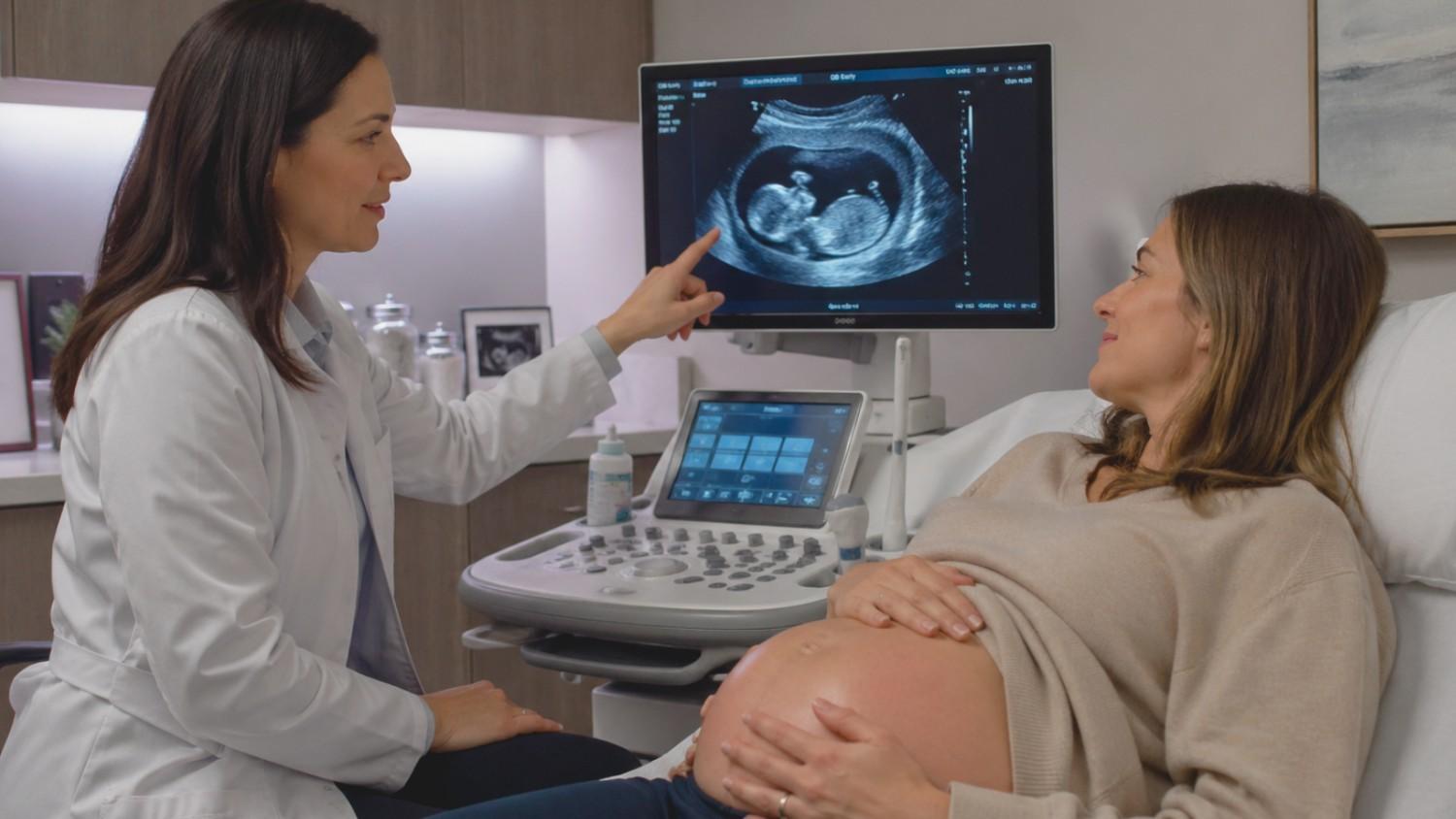
The dating ultrasound is one of the first imaging steps in your prenatal testing schedule. Your OBGYN typically performs this ultrasound at your first prenatal visit, around 7 to 8 weeks gestation.
The dating ultrasound confirms your gestational age and calculates your estimated due date. It verifies the fetal heartbeat, determines whether the pregnancy is a single or multiple pregnancy, and identifies the location of the pregnancy to rule out an ectopic pregnancy. Accurate gestational dating is important for the rest of your first trimester screening because several tests depend on precise timing to produce reliable results.
Having your dating ultrasound at the same practice where you receive all of your prenatal care keeps your records in one place and gives your provider immediate access to your imaging results. You can read more about the full ultrasound schedule across all three trimesters in our guide on how many ultrasounds you will have during pregnancy.
What Is Cell-Free DNA Testing and What Does It Screen For?
Cell-free DNA testing, often called non-invasive prenatal testing (NIPT) or non-invasive prenatal screening (NIPS), analyzes small fragments of fetal DNA that circulate in the mother’s bloodstream. The placenta releases these DNA fragments, and a simple blood draw from the mother’s arm provides the sample. Cell-free DNA testing is available starting at 10 weeks gestation.
This screening evaluates the risk for several chromosomal conditions:
| Condition | What It Means |
| Down syndrome (trisomy 21) | An extra copy of chromosome 21; the most common chromosomal condition |
| Edwards syndrome (trisomy 18) | An extra copy of chromosome 18; associated with serious developmental concerns |
| Patau syndrome (trisomy 13) | An extra copy of chromosome 13; associated with serious developmental concerns |
| Sex chromosome abnormalities | Missing or extra X or Y chromosomes |
Cell-free DNA testing can determine the baby’s sex as well. Results typically return within 1 to 2 weeks. Your OBGYN can order this test during a routine prenatal visit, and you can learn more about the benefits of this screening in our guide to fetal testing advantages for moms and babies.
The American College of Obstetricians and Gynecologists (ACOG) recommends that all pregnant women be offered screening for chromosomal abnormalities regardless of age. That said, genetic screening during pregnancy is a personal choice. Your OBGYN presents the available options, explains what each test can and cannot tell you, and supports your decision. A positive cell-free DNA result does not mean your baby has a chromosomal condition. It means additional evaluation is recommended to confirm or rule out the finding.
ALSO READ: Creating a Birth Plan: Questions to Discuss with Your OB
What Is Carrier Testing and Who Should Consider It?
Carrier testing is a blood test that checks whether you carry a gene mutation for certain inherited disorders. Carriers of these gene mutations typically have no symptoms, but they can pass the mutation to their child. If both biological parents carry the same gene mutation, the baby has a higher chance of being born with the condition.
Common conditions screened through carrier testing include sickle cell disease, cystic fibrosis, Tay-Sachs disease and spinal muscular atrophy. Your OBGYN discusses your family history and ethnic background to help determine which carrier screening panel is most relevant for your situation. Carrier testing can be performed before or during pregnancy, and many providers offer it at the first prenatal visit. You can learn more about available options in our overview of fetal testing services.
Both cell-free DNA testing and carrier testing are screening tests, which means they estimate risk rather than provide a definitive diagnosis. Diagnostic tests like chorionic villus sampling (CVS) or amniocentesis provide definitive answers about chromosomal or genetic conditions and are performed by Maternal-Fetal Medicine specialists when screening results indicate further evaluation is needed.
What Happens if a First Trimester Screening Result Is Abnormal?
An abnormal first trimester screening result means your baby has an increased risk for a specific condition. It does not confirm a diagnosis. Many women who receive abnormal screening results go on to have healthy pregnancies. Screening tests carry a known rate of false positives, and an abnormal result is a starting point for further evaluation rather than a final answer.
Your OBGYN reviews the abnormal result with you, explains what it means for your specific situation and outlines the recommended next steps. Depending on the finding, your provider may recommend genetic counseling, a referral to a Maternal-Fetal Medicine specialist or diagnostic testing. CVS is typically performed between 10 and 13 weeks, and amniocentesis is performed between 15 and 20 weeks. Gwinnett OB/GYN does not perform CVS or amniocentesis in-house. The practice maintains an established referral network with Maternal-Fetal Medicine specialists and coordinates your care so the transition between providers is as smooth as possible.
ALSO READ: Can You Work During a High-Risk Pregnancy?
A Timeline of First Trimester Screening Tests
The table below provides a clear overview of the prenatal testing schedule during the first trimester. Your OBGYN customizes your screening plan based on your age, family history, medical history and personal preferences.
| Gestational Week | Test | Type |
| ~7 weeks (first visit) | Routine bloodwork panel: CBC, blood type, Rh factor, rubella, hepatitis B, HIV, syphilis, urinalysis, STI screening | Routine |
| ~7-8 weeks | Dating ultrasound | Routine |
| 10+ weeks | Cell-free DNA testing (NIPT) | Optional screening |
| Any time (often first visit) | Carrier testing | Optional screening |
| 11-14 weeks | Nuchal translucency (NT) screening* | Optional screening |
*NT screening is referred to a Maternal-Fetal Medicine specialist.
The distinction between routine and optional tests matters. Routine tests are standard for all pregnancies and give your provider the baseline information needed to monitor your health throughout all three trimesters. Optional screening tests focus on chromosomal and genetic conditions and are offered based on your preferences and risk factors.
Start Your Prenatal Screening at Gwinnett OB/GYN in Snellville, GA
First trimester screening gives you and your OBGYN valuable information about your health and your baby’s development at the earliest stage of pregnancy. Understanding what each test does, when it happens and what the results mean helps you feel more confident and informed as you move through your prenatal care.
The board-certified OBGYN team at Gwinnett OB/GYN brings over 45 years of experience in obstetrics care. The practice offers on-site ultrasound and lab services Monday through Friday, so your dating ultrasound and first-visit bloodwork happen during the same appointment. Cell-free DNA testing and carrier testing are both available on-site, and the practice coordinates referrals when diagnostic testing is needed.
Gwinnett OB/GYN serves patients in Snellville and surrounding communities, including Lawrenceville, Duluth, Loganville, Stone Mountain, Norcross and Lilburn. Schedule your first prenatal appointment at Gwinnett OB/GYN and take the first step in your prenatal testing plan.