
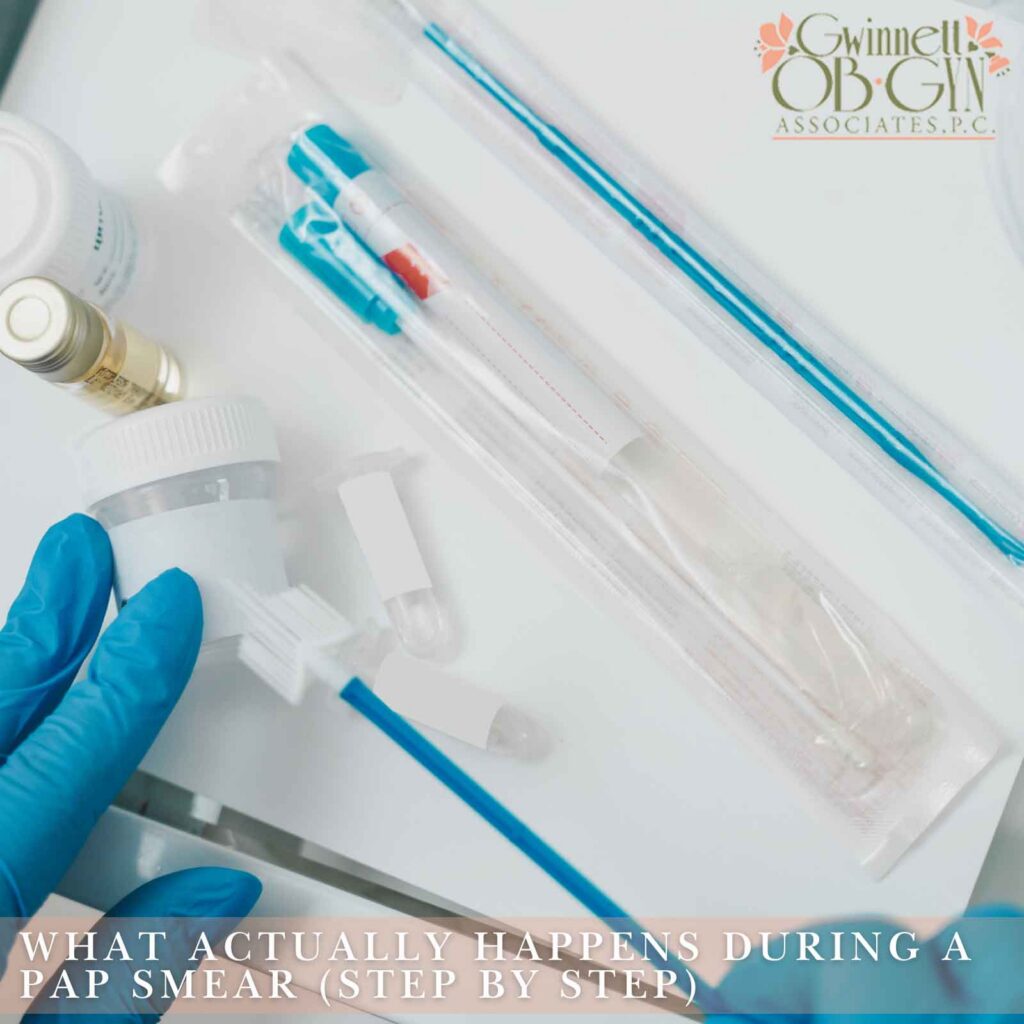
A pap smear is a cervical cancer screening where your OBGYN uses a small brush to collect cells from your cervix. The actual pap smear procedure takes only a few minutes from start to finish. A pap smear test detects precancerous cell changes in the cervix before those changes have the chance to develop into cervical cancer, and the screening is one of the most effective preventive tools in women’s healthcare. Feeling nervous before a pap test is completely normal, and many women share that same feeling regardless of how many times they have had the test. This guide walks through every step of the process so you know exactly what to expect before, during and after your appointment for pap smear services.
What Is a Pap Smear and Why Does It Matter?
A pap smear is a screening test that collects cells from the cervix, the lower part of the uterus that connects to the vagina. A laboratory examines those cells for abnormal changes that could indicate precancerous or cancerous growth. According to Cleveland Clinic, more than 95% of women treated for precancerous cervical cells never develop cervical cancer. That statistic shows how effective early detection through routine pap smear tests can be.
Most cervical cancers are caused by high-risk strains of human papillomavirus (HPV). Your OBGYN can perform an HPV test at the same time as your pap test using the same cell sample. This combined approach is called co-testing. The pap smear checks for abnormal cell changes, and the HPV test checks for the virus that causes most of those changes. A pap smear screens for cancer but does not diagnose it. If your results are abnormal, your provider orders additional testing to determine the cause. Your pap test is often performed during your annual well-woman exam, making it part of a broader preventive care visit rather than a standalone appointment.
How Do You Prepare for a Pap Smear?
Preparing for a pap smear is straightforward. Following a few guidelines in the 48 hours before your appointment helps your provider collect the most accurate sample possible.
During the 48-hour window before your pap test, avoid sexual intercourse, vaginal creams, douches, suppositories, spermicidal foams and tampons. These products and activities can alter cervical cells or obscure the sample your provider collects. Schedule your pap smear outside of your menstrual period when possible. A heavy flow can interfere with result accuracy, and your provider may ask you to reschedule. A light flow is typically fine, and your provider can advise you if timing is a concern.
A pap smear is safe during pregnancy. Your provider may adjust the timing based on your prenatal care plan, but the screening itself poses no risk to you or your baby. Wear comfortable clothing that is easy to remove from the waist down. Write down any questions or concerns you want to discuss with your OBGYN so you feel prepared when you arrive.
What Happens During a Pap Smear, Step by Step?
Knowing each step of the pap smear procedure ahead of time removes the uncertainty that often causes anxiety. Your provider communicates what is happening before each step begins, and you can ask them to pause or adjust at any point.
Step 1: Check-in and gown. A nurse or medical assistant brings you to the exam room. You undress from the waist down and put on a medical gown. Your provider reviews your menstrual cycle history, any symptoms and your questions before the exam begins.
Step 2: Positioning. You lie back on the exam table and place your feet in padded stirrups. Your knees relax outward to give your provider a clear view of the cervix. A drape covers your lap for privacy.
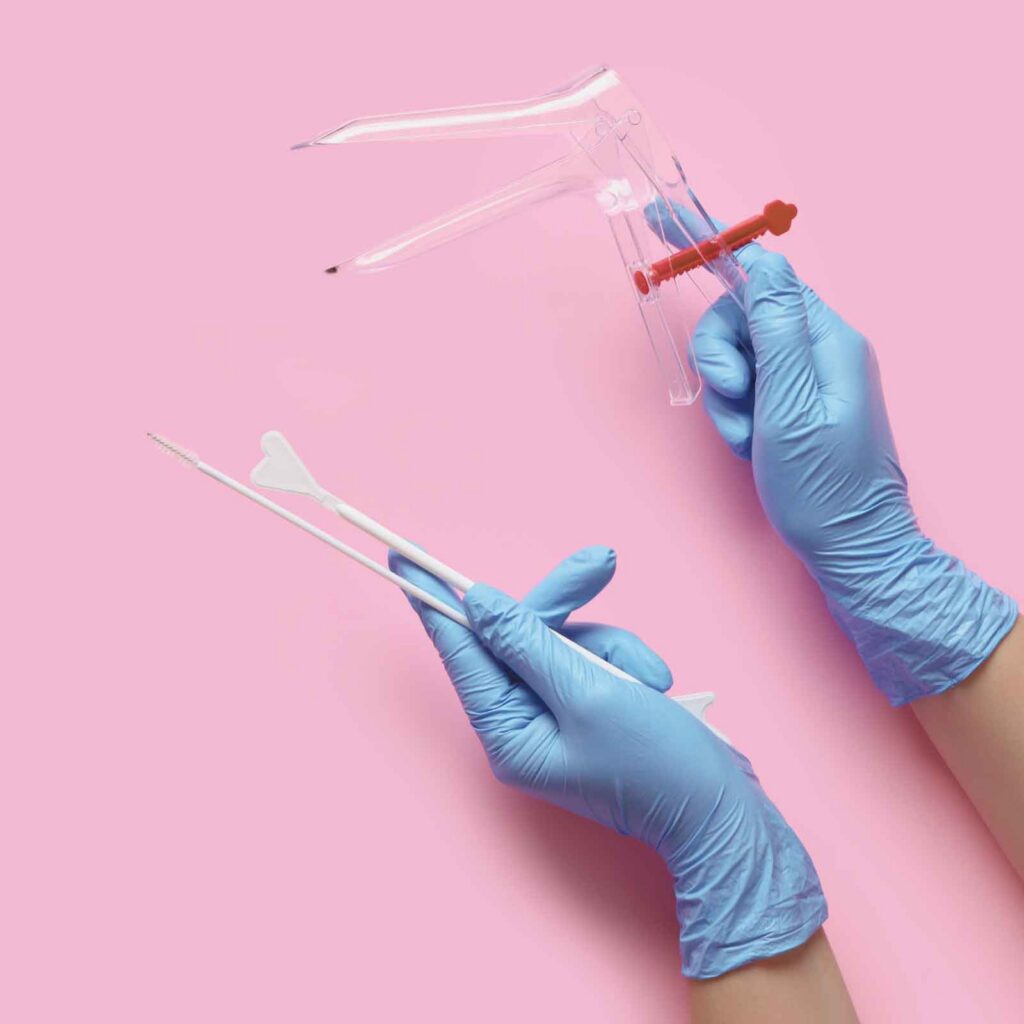
Step 3: Speculum insertion. Your OBGYN gently inserts a speculum into the vagina. A speculum is a smooth instrument made of metal or plastic with two rounded arms that open to widen the vaginal walls. This allows your provider to see the cervix directly. You may feel pressure or a mild stretching sensation during this step. Metal speculums may feel cool at first. Your provider can warm the speculum or use a smaller size if you are uncomfortable.
Step 4: Cell collection. Your provider uses a small, soft brush or thin spatula to gently sweep cells from the surface of the cervix. This step takes only a few seconds. You may feel a brief brushing or light scraping sensation. Most women describe it as unusual rather than painful.
Step 5: Sample preservation. The collected cells go into a small vial of liquid, a method called liquid-based cytology. The vial is labeled and sent to a laboratory for analysis. If your provider is performing an HPV test at the same time, the same sample is used for both the pap test and the HPV test.
Step 6: Speculum removal and completion. Your provider gently closes and removes the speculum. The pap smear procedure itself takes approximately 1-3 minutes. The full appointment, including check-in, history review and pelvic exam, lasts 10-20 minutes.
Does a Pap Smear Hurt?
Most women describe a pap smear as brief pressure or mild discomfort rather than pain. The speculum may create a stretching sensation as it opens inside the vagina, and the cell collection feels like a light brush across the cervix that lasts only seconds.
A few factors can increase discomfort during a pap smear test. Tension in the pelvic floor muscles makes the speculum feel tighter. First-time anxiety often leads to involuntary muscle tightening. Vaginal dryness, which can occur during menopause or with certain medications, may add friction during speculum insertion.
You can take several steps to make the experience more comfortable. Slow, deep breaths help relax the pelvic muscles. Letting your knees fall outward rather than pressing them together reduces tension. Tell your provider if you feel pain so they can adjust the speculum size, add lubrication or pause the procedure. Requesting a smaller speculum is a common and reasonable ask.
Light spotting after a pap smear is normal. The gentle brushing of the cervix can cause minor bleeding that typically resolves within 24 hours. You can learn more about what to expect in our guide on whether bleeding after a pap smear is normal.
What Do Your Pap Smear Results Mean?
Your pap smear results typically arrive within 1-3 weeks. Your OBGYN contacts you to discuss the findings and any recommended next steps.
| Result | What It Means | Typical Next Steps |
| Normal (negative) | No abnormal cervical cells detected | Follow your standard screening schedule based on age |
| Unsatisfactory | Not enough cells collected or sample quality was insufficient | Repeat pap smear in 2-4 months |
| ASC-US | Atypical squamous cells of undetermined significance; mildly abnormal cells found | HPV test if not already done; repeat pap test in 1 year; or colposcopy |
| LSIL | Low-grade squamous intraepithelial lesion; mild cell changes, often related to HPV | Colposcopy for closer evaluation |
| HSIL | High-grade squamous intraepithelial lesion; more significant cell changes that need prompt evaluation | Colposcopy and possible cervical biopsy |
An abnormal pap smear result does not mean you have cervical cancer. Most abnormal results stem from HPV infection, cervical inflammation or minor cell changes that the body resolves on its own over time. Your provider explains your specific result and what it means for your care.
If your results require follow-up, your OBGYN may perform a colposcopy. A colposcopy is an in-office procedure where your provider uses a magnifying instrument called a colposcope to closely examine the surface of the cervix. If an area of concern is visible, your provider may take a small tissue sample (biopsy) for laboratory analysis.
How Often Should You Get a Pap Smear?
Screening frequency for a pap smear depends on your age and health history. The American College of Obstetricians and Gynecologists (ACOG) recommends the following schedule:
| Age Group | Recommended Screening | Frequency |
| Under 21 | No screening needed | N/A |
| 21-29 | Pap test alone | Every 3 years |
| 30-65 | Pap smear + HPV co-test OR Pap test alone OR HPV test alone | Every 5 years (co-test) OR every 3 years (Pap alone) OR every 5 years (HPV alone) |
| 65+ | May stop screening | After 3 consecutive normal Pap results or 2 normal co-tests within the past 10 years |
| After total hysterectomy | Screening typically not needed | Unless history of cervical cancer or precancer |
These guidelines are general recommendations. Your OBGYN may adjust your screening schedule based on individual risk factors, prior abnormal results, immune system status or HPV vaccination history. Talk with your provider about the right interval for your situation. You can read more about screening frequency in our guide on how often you should get a pap smear. HPV is a sexually transmitted infection, and understanding your STD screening options alongside your pap smear schedule can strengthen your overall preventive care plan.
Schedule Your Pap Smear at Gwinnett OB/GYN in Snellville, GA
A pap smear is one of the most effective tools for catching cervical cancer early, and knowing what to expect at each step can make the experience more comfortable and less stressful. The board-certified OBGYN team at Gwinnett OB/GYN brings over 45 years of experience in women’s healthcare, including routine pap smear tests, HPV co-testing and follow-up colposcopy when needed.
Gwinnett OB/GYN offers on-site lab specimen collection Monday through Friday, so your cervical cell sample is processed without an additional trip to an outside lab. The practice creates a supportive environment for first-time patients and women who may have delayed their screening. Every member of the care team prioritizes your comfort and answers your questions at each step of the appointment.
Gwinnett OB/GYN provides gynecology services to women in Snellville and surrounding communities, including Lawrenceville, Duluth, Loganville, Stone Mountain, Norcross and Lilburn. Schedule your pap smear appointment at Gwinnett OB/GYN and take a proactive step in your cervical health.